


Building a Resilient Future: How IFRSLAB Transforms ESG Challenges into Competitive Advantages
The challenge lies not in acknowledging ESG importance, but in executing it effectively across strategy.This is where IFRSLAB delivers distinct value.
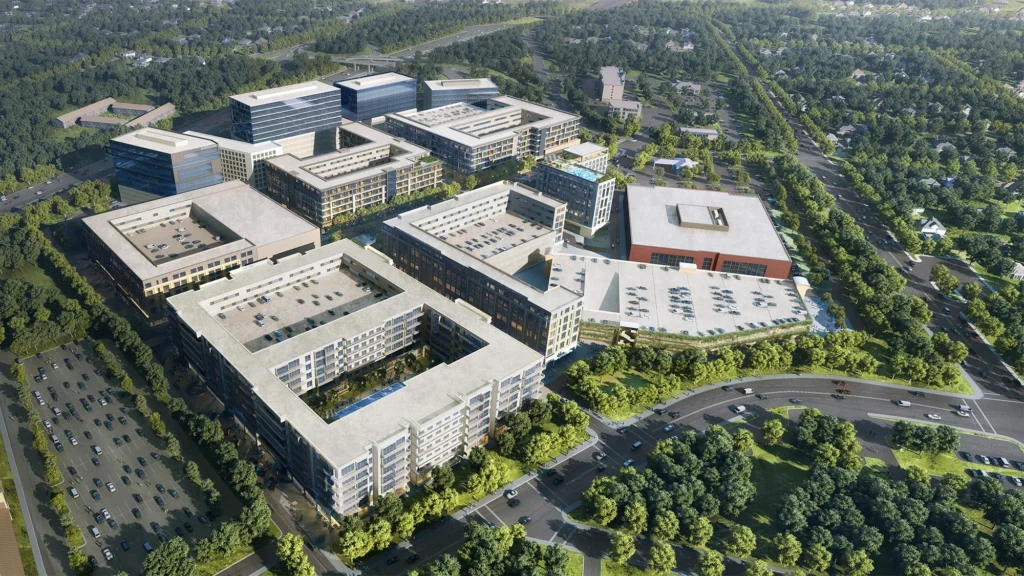
The conversation around architecture has changed forever. It is no longer just about how buildings look or how efficiently they function — it is about how responsibly they perform. Across the global built environment, Environmental, Social, and Governance (ESG) principles are reshaping how projects are conceived, financed, designed, and experienced.
In a world where climate adaptation, social equity, and transparent governance define investment credibility, the built environment stands as both a challenge and an opportunity. Buildings account for nearly 40% of global carbon emissions, yet they also represent one of the most powerful levers to achieve sustainability goals. ESG-oriented design is transforming this reality by turning architecture into a measurable force for environmental restoration, human well-being, and long-term economic value.
For developers, investors, and architects, the question is no longer if ESG matters, but how it can be embedded meaningfully into the design process.
ESG has often been misunderstood as a post-design compliance activity — a checklist to demonstrate alignment with sustainability goals once the project is complete. The new era of ESG design challenges this notion entirely. It demands that sustainability, inclusion, and accountability be integrated from the earliest stages of concept development.
In practice, this means that environmental efficiency, community inclusion, and governance transparency must shape the design brief itself. Site selection, material choices, spatial organization, and even construction logistics now fall under ESG scrutiny. The goal is not to achieve symbolic “green credentials” but to produce measurable performance outcomes across environmental, social, and economic dimensions.
This proactive approach ensures that ESG is not something assessed in hindsight but rather a design intelligence embedded from the first drawing. When projects are informed by science-based targets, lifecycle assessments, and community-centered planning, architecture becomes a tool for measurable transformation — not just compliance.
In ESG-driven architecture, the “E” is not limited to energy efficiency or carbon reduction. It represents a broader responsibility to design environments that give back more than they take.
This begins with data-informed site selection. Architects and developers are now using geospatial mapping and environmental scoring models to evaluate potential sites against multiple indicators — such as flood risk, biodiversity impact, energy access, and microclimate behavior. These insights make it possible to select properties that not only minimize environmental risks but also enhance resilience.
Once the site is chosen, the focus shifts toward performance-driven design. Instead of designing and then measuring impact afterward, forward-looking architects use simulation tools that predict building behavior under various scenarios. This includes modeling daylight distribution, energy consumption, and ventilation efficiency to achieve optimal performance.
Material innovation plays an equally critical role. Designers are exploring bio-based materials like hempcrete, mycelium composites, and cross-laminated timber to reduce embodied carbon. The supply chain transparency demanded by ESG frameworks ensures that sourcing aligns with responsible forestry, fair trade, and recyclability standards.
However, the most progressive designs go beyond reducing harm — they aim for regeneration. Green roofs, passive cooling corridors, and building-integrated photovoltaics transform architecture into environmental infrastructure that actively restores local ecosystems. Buildings designed under such frameworks no longer merely exist within an ecosystem; they participate in its renewal.
The “S” in ESG transforms architecture from a technical exercise into a human-centered practice. A building that meets environmental standards but alienates its users or surrounding communities cannot be considered sustainable.
Social design begins with understanding community context — who the users are, how they interact with space, and what social patterns shape their daily lives. Engaging with stakeholders early in the process creates alignment between architectural intent and community needs. Whether developing a workplace, housing complex, or urban district, consultation ensures that the project serves real people rather than abstract demographics.
Well-being and inclusion are now measurable performance indicators. Metrics such as daylight exposure, spatial accessibility, acoustic comfort, and indoor air quality directly affect human productivity and health. Architects are designing flexible work environments, mixed-use neighborhoods, and inclusive public spaces that promote psychological safety, equity, and belonging.
Design also has a profound economic and social multiplier effect. When urban development’s integrate amenities such as public transit access, affordable retail, and walkable streets, they promote community interaction and reduce economic segregation. By viewing architecture through a social lens, designers and developers can create projects that not only perform sustainably but also contribute to stronger, more equitable societies.
In the workplace context, design is evolving from efficiency to empathy. Post-pandemic behavioral studies show that human connection, flexibility, and emotional well-being are now dominant determinants of employee retention. ESG design therefore reimagines offices as restorative ecosystems — spaces that prioritize light, nature, and inclusivity as much as productivity.
The “G” in ESG often receives the least attention in architectural practice, yet it defines the credibility of the entire framework. Governance in the built environment refers to the systems, policies, and transparency mechanisms that ensure accountability across the design, construction, and operational phases.
In recent years, architecture and real estate firms have faced increasing expectations from investors and regulators to disclose governance performance. This includes data integrity, diversity at leadership levels, ethical procurement, and anti-corruption measures across supply chains.
Governance by design means establishing clear reporting mechanisms for every stakeholder involved in a project — from architects and engineers to contractors and clients. Decisions are documented, supply chains are traceable, and sustainability metrics are independently verified. This approach not only mitigates reputational and legal risks but also enhances investor confidence.
Moreover, the rise of ESG-linked financing has made governance performance a financial determinant. Projects that demonstrate measurable ESG accountability gain preferential access to green bonds and sustainability-linked loans. Transparent governance practices, backed by credible reporting aligned with frameworks like GRI, TCFD, and ISSB, are now viewed as prerequisites for institutional investment.
When architecture aligns design excellence with governance discipline, the result is both creative and credible — a synthesis of vision and verifiability.
To make ESG actionable in design, the industry must move from subjective ideals to quantifiable metrics. This is where innovation and data science converge.
Forward-looking firms are developing tools that assign ESG performance scores to sites and assets before design begins. These systems combine open-source environmental data with social and spatial analytics to identify where interventions can have the highest impact.
Thermal performance, for instance, is now being evaluated as both an energy metric and a social one. By extending thermal comfort zones through passive design — such as operable façades, radiant heating, and outdoor work terraces — designers can reduce energy demand while improving occupant satisfaction. Similarly, urban permeability and amenity access are being quantified to measure neighborhood equity, using proximity metrics that link residents to essential services such as schools, healthcare, and transport.
Beyond environmental and social outcomes, governance-related design metrics are emerging as well. These include transparency scores that evaluate data disclosure, material traceability, and worker safety compliance. As these metrics evolve, the architectural industry is moving toward a science-based framework for ESG — one where qualitative aspiration become verifiable performance outcomes.
The future of ESG in architecture lies in integration — where performance analytics, human experience, and governance frameworks converge into a single design intelligence. Instead of treating sustainability as an external rating or a post-completion audit, the most progressive design practices are embedding ESG thinking into everyday decision-making.
As buildings become smarter and data-driven, design professionals are gaining the ability to simulate and predict environmental and social outcomes long before construction begins. Artificial intelligence and digital twins are enabling continuous feedback loops between design intent and operational performance. This not only improves ESG accuracy but also transforms buildings into adaptive assets capable of learning and evolving over time.
Ultimately, the built environment of the future will not be defined by aesthetics alone, but by its ability to improve the world around it. ESG-driven architecture represents a shift from building for profit to building for purpose — creating spaces that enrich ecosystems, empower communities, and embody transparent governance.
At IFRSLAB, we believe that responsible design is the foundation of resilient business. Our ESG advisory and sustainability consulting services help organizations integrate environmental intelligence, social equity, and governance transparency into their strategies and projects.
Through data-driven frameworks, material benchmarking, and ESG reporting alignment, IFRSLAB enables architects, developers, and corporate clients to design spaces that are not only compliant but competitive.
IFRSLAB — Enabling Businesses to Lead with Responsibility.
The challenge lies not in acknowledging ESG importance, but in executing it effectively across strategy.This is where IFRSLAB delivers distinct value.

At IFRSLAB, we don’t help you check boxes. We build ESG reporting UAE systems that withstand forensic scrutiny, regulatory enforcement, and the inevitable moment when marketing claims meet operational reality.

Every ESG advisory firm promises transformation. Honestly, few deliver infrastructure. In the UAE’s emerging sustainability landscape, where Federal Climate Law mandates take effect in 2026 and capital markets increasingly price climate risk.
UAE : (+971) 52 710 0320 PAK : (+92) 300 2205746 UK : (+44) 786 501 4445
Office 2102 Al Saqr Business Tower 1, Sheikh Zayed Road
S-25, Sea Breeze Plaza Shahrah-e-Faisal, Karachi
Office#1304, 13th Floor, Al Hafeez Heights, Gulberg III
P.O. Box 71, P.C. 100, Muscat
104 Broughton Lane Salford M6 6FL,
UAE : (+971) 52 710 0320 PAK : (+92) 300 2205746 UK : (+44) 786 501 4445
Office 2102 Al Saqr Business Tower 1, Sheikh Zayed Road
S-25, Sea Breeze Plaza Shahrah-e-Faisal, Karachi
Office#1304, 13th Floor, Al Hafeez Heights, Gulberg III
104 Broughton Lane Salford M6 6FL
P.O. Box 71, P.C. 100, Muscat

Typically replies within a day