

Building a Resilient Future: How IFRSLAB Transforms ESG Challenges into Competitive Advantages
The challenge lies not in acknowledging ESG importance, but in executing it effectively across strategy.This is where IFRSLAB delivers distinct value.
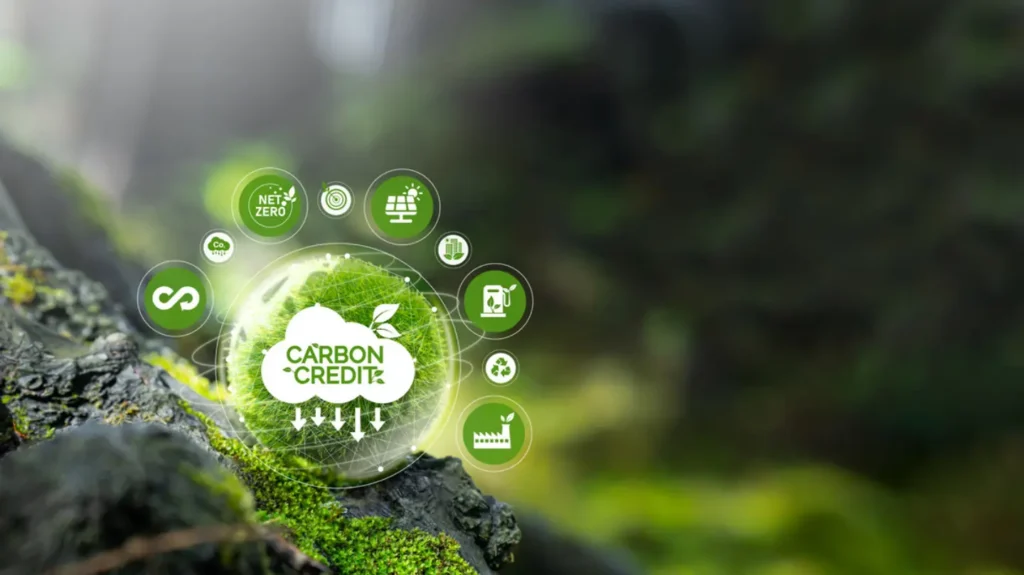
In today’s economy, carbon is not only an environmental issue; it is a financial and strategic variable. Every kilowatt of energy consumed, every shipment delivered, and every product manufactured has a carbon footprint—and that footprint now translates into cost, compliance, and credibility.
At its most fundamental level, carbon refers to greenhouse gases such as carbon dioxide (CO₂), methane (CH₄), and nitrous oxide (N₂O), which trap heat in the atmosphere. The concentration of these gases has reached unprecedented levels, triggering visible climate impacts and a global regulatory response. Governments are introducing carbon taxes, disclosure mandates, and stricter emission caps. Investors are screening portfolios for credible transition plans. Supply chains are setting climate requirements for their vendors.
In this environment, companies can no longer afford to treat emissions as an externality. Carbon has become a measurable business risk and an operational performance metric. Businesses that quantify and manage their footprint are not only protecting their reputation—they are improving efficiency, reducing exposure to volatile energy markets, and unlocking access to sustainable finance.
That is where carbon consulting comes in. It provides the science, structure, and strategy for organizations to measure, reduce, and report their greenhouse gas emissions with precision and credibility.
Carbon consulting is a comprehensive professional service that combines technical assessment, data analytics, and strategic management to help businesses build an evidence-based decarbonization roadmap. The process begins with establishing a greenhouse gas (GHG) inventory—a detailed record of emissions from every part of an organization’s operations. This inventory forms the baseline for all subsequent planning and reporting.
A robust carbon consulting engagement by IFRSLAB typically covers four pillars:
This stage involves identifying emission sources and quantifying them in accordance with the Greenhouse Gas Protocol or ISO 14064 standards. Emissions are categorized into three “scopes”:
Scope 3 emissions usually dominate the total footprint—often 70–90%—and present the biggest challenge for accurate data capture. IFRSLAB’s specialists address this by mapping material categories, prioritizing high-impact areas, and developing scalable data collection mechanisms.
Once the footprint is clear, the next step is to determine where reductions can be achieved most efficiently. IFRSLAB conducts a hotspot analysis to identify emission-intensive activities and uses a marginal abatement cost curve to evaluate the economics of each potential initiative.
The roadmap usually combines immediate efficiency measures (the “quick wins”) with longer-term investments such as renewable energy integration, process redesign, and supplier decarbonization. Every recommendation is backed by financial modeling that helps management weigh payback periods, internal rates of return, and capital requirements.
True decarbonization depends on sustained organizational alignment. IFRSLAB supports clients in embedding carbon performance into procurement, operations, finance, and governance structures. This involves developing internal policies, defining responsibilities, setting Key Performance Indicators (KPIs), and training teams to manage progress.
Technology plays a key role. Advanced energy management systems, smart meters, IoT sensors, and automated data pipelines allow for continuous tracking of carbon performance across facilities. IFRSLAB designs these data architectures to ensure that every figure reported is traceable, auditable, and ready for external verification.
Transparent reporting is what turns carbon management into trust. IFRSLAB aligns disclosures with frameworks such as the Science-Based Targets initiative (SBTi), CDP, TCFD, and CSRD, ensuring that businesses meet both regulatory and investor expectations. Detailed documentation of methods, emission factors, and calculations also prepares clients for third-party assurance, helping them avoid accusations of greenwashing.
Through this end-to-end process, carbon consulting transforms climate ambition into measurable business outcomes.
Reducing emissions is not just an environmental responsibility—it is an economic advantage. Forward-looking organizations recognize that decarbonization and profitability are no longer opposing forces; they are increasingly aligned.
Energy-efficient equipment, optimized logistics, and renewable energy procurement reduce operating expenses and protect against volatile fuel prices.
With carbon taxes, emission caps, and disclosure mandates expanding globally, proactive management minimizes future compliance costs and liabilities.
Financial institutions are embedding ESG metrics into credit assessments. Verified carbon data improves access to capital and can lower financing costs through sustainability-linked loans.
Large multinational buyers require emission data and reduction commitments from suppliers. Demonstrating compliance ensures continuity in contracts and strengthens business relationships.
Employees increasingly want to work for purpose-driven organizations. A well-articulated sustainability program enhances employer brand and customer loyalty alike.
In short, carbon reduction is a multi-benefit strategy. It improves margins, safeguards reputation, and strengthens long-term resilience.
Many organizations hesitate to act because carbon accounting appears technical and resource-intensive. IFRSLAB simplifies this journey with a pragmatic, data-driven approach designed for scalability.
This combination of expertise, systems, and governance helps organizations move beyond fragmented sustainability projects toward a coherent decarbonization strategy aligned with global standards.
The maturity of carbon management within a company is often a reflection of its overall governance strength. When handled well, carbon accounting is not a side project—it becomes part of strategic planning, budgeting, and performance review.
IFRSLAB helps clients institutionalize this integration through structured governance models:
Embedding carbon strategy at this level ensures longevity and consistency. It also positions the organization to respond swiftly to evolving disclosure requirements under frameworks such as the ISSB and SEC Climate Rules.
Carbon neutrality is no longer an aspiration reserved for global conglomerates; it is a necessity for every business seeking relevance and resilience in a low-carbon economy. Whether your company operates in manufacturing, real estate, logistics, or services, the message from markets and regulators is clear—measure, disclose, and decarbonize.
The journey starts with understanding where you stand today. IFRSLAB can help your organization quantify its emissions, design a reduction strategy that fits your business model, and build the systems needed to track progress with integrity.
Connect with IFRSLAB to begin a structured, data-driven path to sustainability—one that strengthens your profitability, reputation, and long-term resilience in a rapidly changing world.
The challenge lies not in acknowledging ESG importance, but in executing it effectively across strategy.This is where IFRSLAB delivers distinct value.

At IFRSLAB, we don’t help you check boxes. We build ESG reporting UAE systems that withstand forensic scrutiny, regulatory enforcement, and the inevitable moment when marketing claims meet operational reality.

Every ESG advisory firm promises transformation. Honestly, few deliver infrastructure. In the UAE’s emerging sustainability landscape, where Federal Climate Law mandates take effect in 2026 and capital markets increasingly price climate risk.
UAE : (+971) 52 710 0320 PAK : (+92) 300 2205746 UK : (+44) 786 501 4445
Office 2102 Al Saqr Business Tower 1, Sheikh Zayed Road
S-25, Sea Breeze Plaza Shahrah-e-Faisal, Karachi
Office#1304, 13th Floor, Al Hafeez Heights, Gulberg III
P.O. Box 71, P.C. 100, Muscat
104 Broughton Lane Salford M6 6FL,
UAE : (+971) 52 710 0320 PAK : (+92) 300 2205746 UK : (+44) 786 501 4445
Office 2102 Al Saqr Business Tower 1, Sheikh Zayed Road
S-25, Sea Breeze Plaza Shahrah-e-Faisal, Karachi
Office#1304, 13th Floor, Al Hafeez Heights, Gulberg III
104 Broughton Lane Salford M6 6FL
P.O. Box 71, P.C. 100, Muscat

Typically replies within a day